1500 Watt Inverters Compared: Pure Sine, Modified Sine and 24-Volt
A 1,500-watt inverter runs a compact microwave, a coffee maker, most power tools or a small home-backup setup from a 12- or 24-volt battery. The choice that matters most is not the brand but the waveform: pure sine wave for anything with electronics or a motor, modified sine wave only for simple loads. Here is how the 1,500-watt inverters we carry compare.
- Pure sine wave runs everything; modified sine wave saves money but can make some devices hum, run hot or misbehave
- At full load a 12-volt 1,500-watt inverter draws about 150 amps, so it must be wired to the battery, never a power socket
- 24-volt systems draw half the current, with lighter cable
- If you are buying pure sine wave, compare the 2,000-watt models too: they are sometimes cheaper
Pick by what you are running



| Continuous power | Surge | Waveform | GFCI-protected outlets | Weight | ||
|---|---|---|---|---|---|---|
|
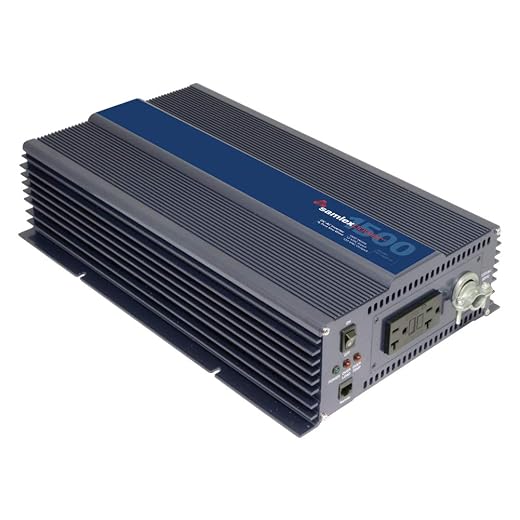
Samlex PST‑1500‑12
Best 1,500 W pure sine
|
1,500 W | Not listed | Pure sine | Yes, 2 | 17 lb | BUY NOW |
|
Thor THPW2000
Best value pure sine
|
2,000 W | 4,000 W | Pure sine | Not listed | 14.75 lb | BUY NOW |
|
Samlex SAM‑1500‑12
Budget pick
|
1,500 W | 3,000 W | Modified sine | Not listed | Not listed | BUY NOW |
|
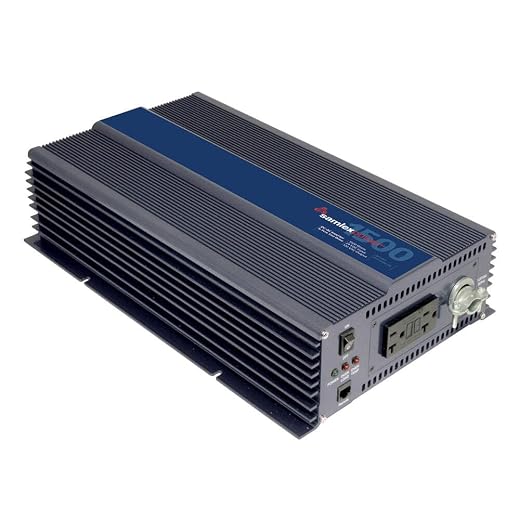
Samlex PST‑1500‑24
For 24 V
|
1,500 W | Not listed | Pure sine | Yes, 2 | 16.8 lb | BUY NOW |
|
Samlex SSW‑1500‑12A
Most compact
|
1,500 W | 3,000 W | Pure sine | Yes, 2 | 7.7 lb | BUY NOW |

Go Power GP‑1750HD
Modified sine alternative
|
1,500 W | 1,750–2,100 W | Modified sine | Not listed | 6.4 lb | BUY NOW |
How many amps does a 1,500-watt inverter draw?
About 150 amps from a 12-volt battery at full load, or about 75 amps at 24 volts — a little more than the watts divided by the voltage, because no inverter is 100% efficient. That is why it must be wired straight to the battery with heavy cable and a fuse. Our inverter calculator gives the cable size for your cable run.
Pure sine wave or modified sine wave?
Pure sine wave matches household power and runs everything. Modified sine wave costs less and is fine for heaters, incandescent lights and many simple tools, but some electronics, chargers, CPAP machines, microwaves and variable-speed tools run hotter, hum or misbehave on it. If anything you plan to run has electronics, buy pure sine wave.
Can a 1,500-watt inverter run a microwave?
A compact one, usually. Size on the microwave’s input watts, not its cooking watts: a 700-watt microwave draws roughly 1,000 to 1,200 watts. Use pure sine wave. Our 12 volt microwave guide covers the details.
Should I buy 1,500 watts or 2,000 watts?
Add up everything you will run at the same time, then allow for startup surge from anything with a motor or compressor — the inverter calculator does both. If you land near 1,500 watts, the extra headroom of a 2,000-watt unit is worth having, and some 2,000-watt pure sine models cost less than 1,500-watt ones.
Can I plug a 1,500-watt inverter into a cigarette lighter socket?
No. A vehicle power socket is fused at 15 to 20 amps, about 150 to 250 watts. A 1,500-watt inverter needs a direct battery connection with properly sized cable and a fuse close to the battery.
Bottom line
Decide the waveform first. For anything with electronics or a motor, buy pure sine wave: the Samlex PST-1500-12 is the 1,500-watt pick, and the Thor THPW2000 is worth comparing because it adds capacity and has often cost less. For heaters, lights and simple tools, the modified sine Samlex SAM-1500-12 saves money. On a 24-volt system, the PST-1500-24 halves the current. Whatever you choose, wire it to the battery with cable sized for the current and a fuse — see our Class T fuse guide.