Class T Fuses Compared: 110A-400A, Slow Blow vs. Fast Blow
We carry Class T fuses from 110A up to 400A for inverter and high-current DC protection. Amp rating is only half the decision — these come in two different response types, slow blow and fast blow, and picking the wrong one for your equipment can mean nuisance trips or under-protection.
- Amp rating must match (or safely exceed) your equipment's fuse spec
- Slow blow (time-delay) tolerates brief startup surges without tripping
- Fast blow trips immediately on overcurrent — no surge tolerance
- Check what your inverter or equipment manufacturer specifies before choosing
Most inverter manufacturers spec a slow blow (time-delay) Class T fuse specifically because inverters draw a brief, higher inrush current at startup — a slow blow fuse rides through that safely. A fast blow fuse has no such tolerance and can trip on that same startup surge even though your system is working normally. Our Go Power F-400 is slow blow. All five South Bend Components fuses (225A-400A) are fast blow. Check your equipment’s documentation for which type it calls for before ordering — don’t choose based on amp rating and price alone.
Our lineup at a glance
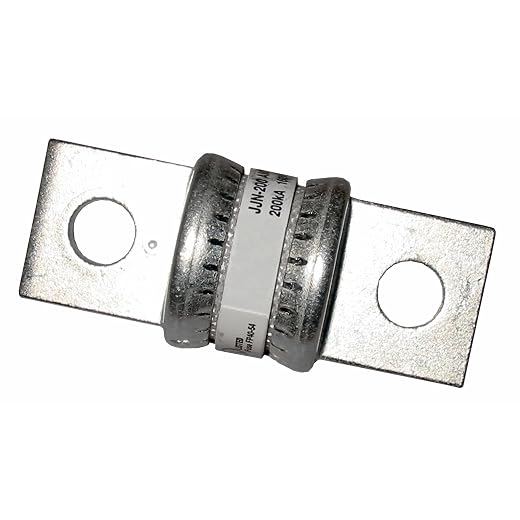
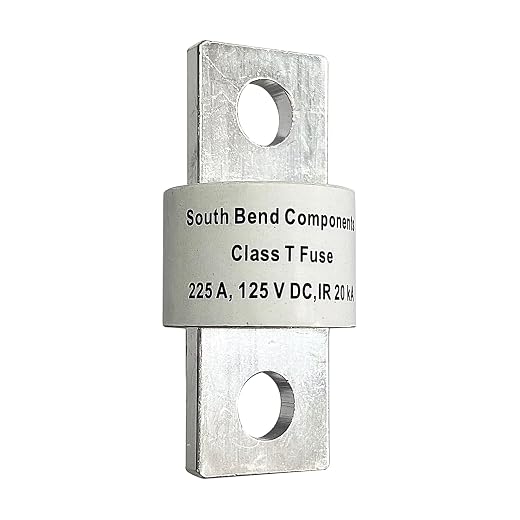


| Amp Rating | Blow Type | Voltage Rating | Brand | UL Listed | Mount Style | ||
|---|---|---|---|---|---|---|---|
| 110A | Slow Blow | 125V | Go Power | Through-hole | BUY NOW | ||
| 225A | Fast Blow | 125V | South Bend | Through-hole | BUY NOW | ||
| 250A | Fast Blow | 125V | South Bend | Through-hole | BUY NOW | ||
| 300A | Fast Blow | 125V | South Bend | Through-hole | BUY NOW | ||
| 350A | Fast Blow | 125V | South Bend | Through-hole | BUY NOW | ||
| 400A | Fast Blow | 125V | South Bend | Through-hole | BUY NOW | ||
| 400A | Slow Blow | 125V | Go Power | Through-hole | BUY NOW |
How do I know if I need slow blow or fast blow?
Check your inverter, charger, or equipment’s owner’s manual or fuse specification — it will call out the fuse type directly, usually as “time-delay” (slow blow) or just a Class T amp rating without qualification (often fast blow). If your equipment specifically calls for a time-delay/slow-blow fuse and you install a fast-blow fuse instead, you risk nuisance trips on normal startup.
What amp rating do I need for my inverter?
Start from the inverter’s continuous DC input current — our inverter calculator works it out from what you plan to run, along with the battery cable size. Then use the fuse rating the inverter’s manufacturer recommends. As a rule of thumb the fuse is sized around 125% of the continuous DC current, and never above what the cable can safely carry: the fuse is there to protect the cable.
Are the South Bend fuses a safe substitute for the Go Power F-400?
Only if your equipment doesn’t require a slow-blow fuse. They’re not a direct swap for an application that specifically calls for time-delay protection — match blow type first, then amp rating.
Why is the 400A South Bend fuse cheaper than the Go Power F-400?
They’re different fuse technologies (fast blow vs. slow blow) from different manufacturers, not the same part at two prices — the price difference isn’t a straight discount, it reflects the different components and design.
Bottom line
Match blow type to your equipment’s spec first, then pick the amp rating. If your inverter or charger calls for a time-delay/slow-blow Class T fuse, the Go Power F-400 (400A) is your option here. If your application doesn’t require surge tolerance, the South Bend Components lineup covers 225A through 400A at a lower price point. Need a fuse holder/block too? The Renogy 150A holder pairs with the F-110, and the South Bend Components holder (225A-400A, same brand) pairs with the rest of the lineup.